5 day Peru itinerary: Lima, Machu Picchu and Cusco with zero wasted days
Five days is the shortest trip to Peru we will honestly design — and designed well, it holds the whole essential arc: Lima, the Sacred Valley, Machu Picchu, Cusco. This page shows that plan day by day, exactly as our engine builds it, and is equally honest about what five days cannot hold. Toggle for couples or families, in three styles, then take it into the planner and make it yours.
Why five days works at all
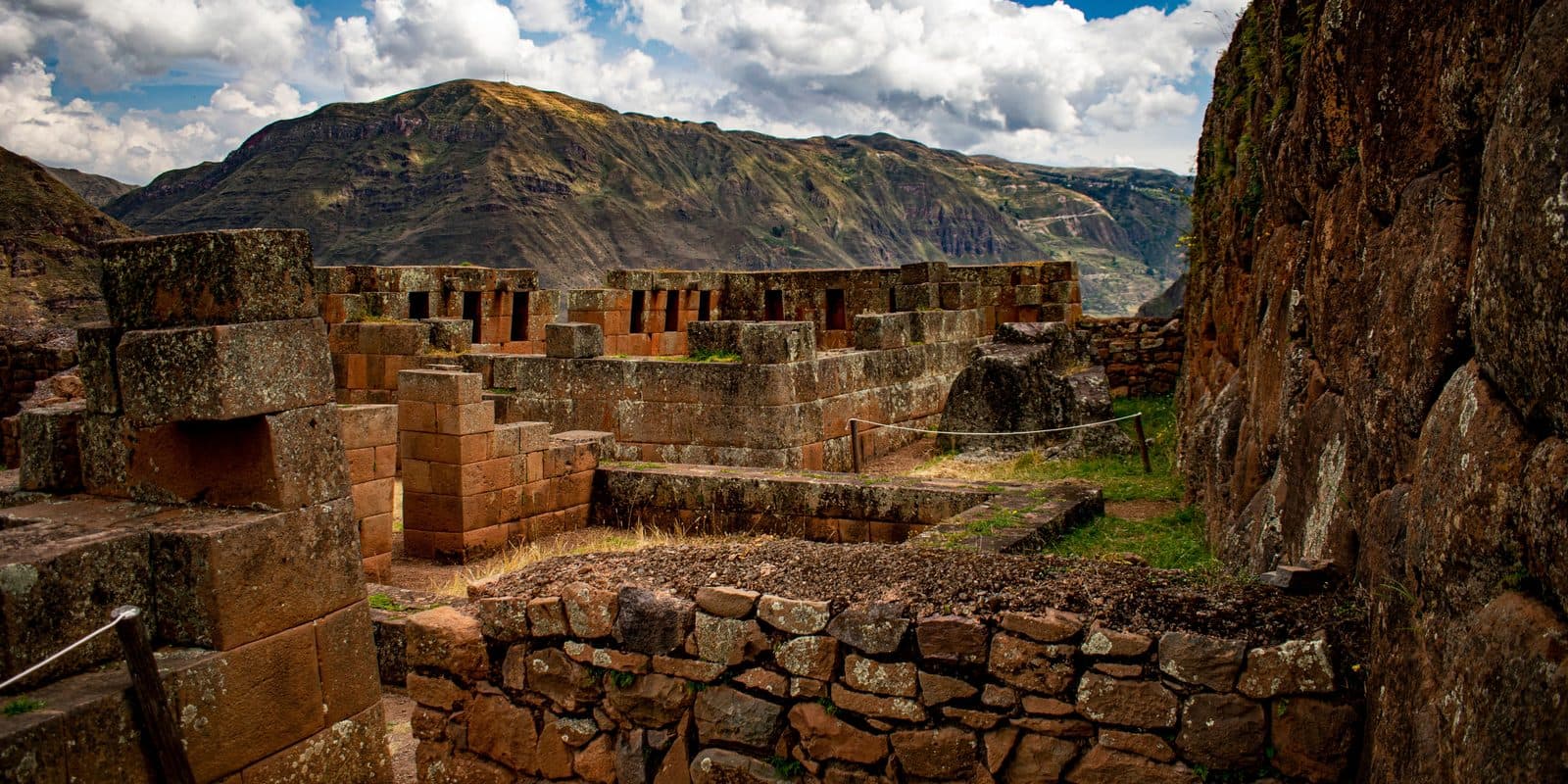
Most five-day Peru plans fail before the plane lands, because they are seven-day plans with two days sawn off — Lima keeps its two nights, Cusco stays the base camp, and Machu Picchu becomes a frantic out-and-back. The version that works is built the other way around: start from the one immovable day, the citadel, and let altitude arrange everything else. Lima gets an evening and a morning at sea level. On day two you fly to Cusco and drive straight down to the Sacred Valley — five hundred meters lower than the city, at about 2,800 m — visiting the salt terraces of Maras and the circular fields of Moray on the way in. You sleep low. Day three is the day it was all for: the early train from Ollantaytambo, the citadel with a guide, and Cusco that night. Day four belongs to Cusco whole. Day five flies you home.
Notice what that shape refuses to do: it never backtracks, never bases high before sleeping low, and never spends two of your five days repeating the same road. It is the same skeleton as our longer routes — the 10-day itinerary and the two-week route — compressed to its load-bearing walls. The same altitude logic is unpacked in Sacred Valley vs. Cusco; here it simply has no room to be optional.
The itinerary, day by day — pick who travels and how
The plan below is generated by the same engine that builds trips in our planner, from the same day templates our local team operates. Choose your travel party and style; every variant keeps the order and the sleep-low logic intact. Open any day for its story.
The tightest honest version of Peru for two: shared services where they make sense, private transfers where timing matters, 3-star boutique stays, and not one padded hour. This is the five-day plan most couples on a hard vacation budget of days actually need.
Five days, built only for two adults: private service throughout, 4-star character hotels, the Sacred Valley entered through its salt terraces, and evenings that end at a table. Short does not mean rushed — it means every hour is chosen.
The five-day arc, fully private and 5-star: the best rooms in each place, the panoramic train, days that start when you decide. On a route this compressed, luxury buys the one thing five days lacks — ease.
The family version of the essential arc: same order, same sleep-low logic, gentler density. One flight, one train, one mountain city — a shape simple enough that a seven-year-old can hold the whole trip in their head.
Five days private and 5-star with children: your own guide and vehicle, hotels with pools and connecting rooms, and a plan that survives a nap after Machu Picchu. The skeleton is untouched; the friction is gone.
Day 1 · Lima
Arrival in Lima
You land in Lima: we'll be waiting at the airport with a YouAskWePlan sign to take you to your hotel. The first night is for landing.
Day 2 · Sacred Valley
Maras and Moray
Flight from Lima to Cusco (referential fare included) and straight into the Sacred Valley: the Maras salt ponds and the Moray terraces welcome you on the way to your hotel. You sleep in the Valley, at 2,800 m — the best way to acclimatize.
Day 3 · Cusco
Machu Picchu
The big day: a pre-dawn departure from the Valley to Ollantaytambo, train to Machu Picchu and the citadel with a site guide. In the afternoon, the return train and transfer to your hotel in Cusco — you sleep in the city that night.
Day 4 · Cusco
Cusco city tour
Cusco for a full day: the Coricancha, the Cathedral and Sacsayhuamán — in shared service with other travelers, the imperial city as a farewell.
Day 5 · Cusco
Return flight
Return flight to Lima (referential fare included) for your connection home. We'll be waiting at your hotel with a YouAskWePlan sign to take you to the Cusco airport.
Day 1 · Lima
Arrival in Lima
You land in Lima: we'll be waiting at the airport with a YouAskWePlan sign to take you to your hotel. The first night is for landing.
Day 2 · Sacred Valley
Maras and Moray + Picnic lunch from Cicciolina Restaurant in Maras or Huaypo
Flight from Lima to Cusco (referential fare included) and straight into the Valley: the Maras salt ponds and the Moray terraces on the way, with a Cicciolina picnic laid out among the terraces. You sleep in the Valley, at 2,800 m.
Day 3 · Cusco
Machu Picchu
The big day: a pre-dawn departure from the Valley to Ollantaytambo, train to Machu Picchu and the citadel with a private guide. In the afternoon, the return train and transfer to your hotel in Cusco — you sleep in the city that night.
Day 4 · Cusco
Private half-day horseback riding tour around Cusco + Three-course dinner at Pachapapa Restaurant
Cusco on horseback, a private half day: you climb above the city to the ruins almost nobody walks, red rooftops below. At night, a table at Pachapapa, in a San Blas courtyard with a clay oven.
Day 5 · Cusco
Return flight
Return flight to Lima (referential fare included) for your connection home. We'll be waiting at your hotel with a YouAskWePlan sign to take you to the Cusco airport.
Day 1 · Lima
Arrival in Lima
You land in Lima: we'll be waiting at the airport with a YouAskWePlan sign to take you to your hotel. The first night is for landing.
Day 2 · Sacred Valley
Maras and Moray
Flight from Lima to Cusco (referential fare included) and straight into the Sacred Valley: the Maras salt ponds and the Moray terraces welcome you on the way to your hotel. You sleep in the Valley, at 2,800 m — the best way to acclimatize.
Day 3 · Cusco
Machu Picchu
The big day: a pre-dawn departure from the Valley to Ollantaytambo, train to Machu Picchu and the citadel with a private guide. In the afternoon, the return train and a private transfer to your hotel in Cusco. If you'd like the Hiram Bingham luxury train, we coordinate it with you.
Day 4 · Cusco
Cusco city tour
Cusco for a full day: the Coricancha, the Cathedral and Sacsayhuamán — the imperial city as a farewell.
Day 5 · Cusco
Return flight
Return flight to Lima (referential fare included) for your connection home. We'll be waiting at your hotel with a YouAskWePlan sign to take you to the Cusco airport.
This plan opens on your canvas exactly as you see it: move days, remove or add experiences, and the total appears once you pick your dates.
Looking for treks, mountains and more adrenaline? That's a different rhythm, not a variant of this plan: meet the Adventure door.
The route at a glance: five days, three altitudes
Where you sleep is the entire strategy of a short Peru trip. The table reads top to bottom as your body will live it:
| Nights | Where | Altitude | Why here, why now |
|---|---|---|---|
| 1 | Lima | Sea level | Land, breathe oxygen-rich air, eat one great dinner. The coast is your runway, not your destination. |
| 1 | Sacred Valley | ≈ 2,800 m | The acclimatization trick: fly high, sleep low. Salt terraces and circular fields on the way in; the Machu Picchu train leaves from here at dawn. |
| 2 | Cusco | ≈ 3,400 m | You arrive the evening after Machu Picchu, with two Andean days already behind you — the city as a reward, not a test. |
| — | Machu Picchu | ≈ 2,430 m | Day three, from the valley side: the lowest point of your Andean days, and the reason the whole shape exists. |
Three altitudes, one direction, no repeats. Every variant on this page — couple or family, any of the three doors — keeps this table intact, because it is not a preference. It is the plan.
What you sacrifice with five days — and what seven gives back
Here is the section most itinerary pages skip, and the one that decides whether you should be on this page at all. Five days buys the essential arc. It pays for it with everything else, and you should see the bill before you commit.
Lima loses its food scene. You get one dinner and a morning walk — enough to feel the city, not enough to eat it. Lima on a longer route is two days of markets, cevicherías and neighborhoods; on five it is a beautiful layover. The Sacred Valley loses its slowness. You enter through Maras and Moray and sleep one night; the market mornings in Pisac, the fortress at Ollantaytambo climbed at your own pace, the second valley day that turns a corridor into a place — those belong to longer trips. Cusco loses its second day. One full day covers the Coricancha, the Cathedral and Sacsayhuamán; the slow morning in San Blas does not fit. And everything beyond the arc is simply out: Rainbow Mountain, the Amazon, Arequipa, Titicaca, every trek.
What does day six and seven buy back? Almost exactly that list. Our 7-day classic journey is this same skeleton with the pressure released: the valley gets its second day, Lima gets its food, and no single delay can knock over the row of dominoes. It is the version we recommend first whenever the calendar allows. With ten days the trip gains depth — more of the valley, all of Cusco, the coast unhurried — and with fourteen it gains the pace where nothing is defended, everything breathes. Five days is the right trip when the days genuinely do not exist. It is the wrong economy when they do — the flights cost the same, the jet lag costs the same, and every added day is nearly pure trip. Buy the days if you can. This page is for when you truly cannot.
Is five days enough for Peru? The honest answer
Enough for Peru, no — no number of days is; the country is the size of Western Europe and holds coast, Andes and Amazon. Enough for the reason most first-time travelers come — to stand in Machu Picchu without the trip around it being a blur — yes, provided the plan respects the two physical constraints that do not care about your schedule: altitude, which decides where you sleep, and the citadel's entry system, which decides your one immovable day. This page exists because "five days in Peru" is usually searched with a plane ticket already half bought, a wedding or a work week framing the dates. If that is you: it works, this is the shape, and the honest cost is the section above. Our how many days in Peru guide walks the same question from the other direction, when the dates are still soft.
Traveling as a couple vs. traveling as a family
The toggle above changes less than you might expect, and that is deliberate. The order of cities, the sleep-low logic and the one immovable day are identical for every travel party, because altitude does not negotiate with age. What the family variant changes is density: days carry fewer stacked plans, hotels are chosen for connecting rooms and early kitchens, and the experiences lean toward terraces to run on rather than museums to whisper in. A five-day trip with children works precisely because this shape is simple — one flight, one train, one mountain city, a story a child can follow. The couple variants spend the same hours on longer tables and higher balconies. One honest note: the Romantic door is built strictly for two adults — with children the toggle offers the Classic and Luxury doors, which is not a limitation so much as the truth about what that door is.
The three doors: same route, three ways to live it
Every door below runs the same five days in the same order. What changes is the texture — service, rooms, the temperature of the evenings. No prices live on this page: the cost of your exact version appears in the planner once your dates and travelers are real, which is the only moment a number can be honest.
| Door | Service | Hotels | Built for |
|---|---|---|---|
| Classic | Shared where it makes sense, private where timing matters | 3-star boutique | First trips on a hard budget of days — every essential, nothing padded |
| Romantic | Private throughout | 4-star with character | Two adults only — evenings that end at a table, not a bus |
| Luxury | Fully private, panoramic train | 5-star | Buying the one thing five days lacks: ease |
Looking for treks and adrenaline instead? That is a different rhythm, not a door on this page — meet the Adventure journey when your calendar has more room, because five days and a trek do not honestly coexist.
The Machu Picchu day: the one you never improvise
Day three is the trip's spine, and on a five-day plan it has no understudy: there is no slack day to absorb a sold-out train or a missed entry window. The mechanics deserve their own pages and have them — how to get to Machu Picchu for the whole chain of road, rails and shuttle, and Machu Picchu tickets for the entry itself: circuits that see different things, daily quotas, and how far ahead the good windows disappear. The short version for a five-day trip: the ticket and the train are the first two things anyone should secure — before hotels, before the Lima flight if you can — and the entry hour must be chosen backwards from the train that reaches the valley station. In the plans on this page that arithmetic is already done: the day leaves the Sacred Valley at dawn precisely so the citadel gets your freshest hours and Cusco gets your evening.
The arithmetic of arrival: flights and the day-zero trap
A five-day plan is really a five-day plan plus the flight that delivers you. Most international arrivals reach Lima at night, which is why day one asks nothing of you but a hotel bed and, if you land earlier, one unhurried dinner. Resist the urge to "save" day one by flying straight through to Cusco on arrival: same-day connections onto the morning Cusco flights are fragile, your luggage's connection is more fragile still, and landing at 3,400 m after twenty hours of travel is exactly the mistake the whole route is built to avoid. The plan's day two flight to Cusco is mid-morning for the same reason — it absorbs a late arrival the night before. On the far end, day five's return to Lima connects to evening departures comfortably. If your dates force a tighter frame than this, that is the moment to talk to the planner rather than compress the middle: the middle is already as compressed as honesty allows.
Lima in one evening and a morning: spend it deliberately
Since the coast only gets hours, spend them like a local would spend a good Friday. The evening belongs to one excellent table — not a food crawl, one place chosen ahead, because the great rooms book out and a five-day trip has no second chance at this dinner. The morning belongs to a single neighborhood on foot: the cliff-walk parks and galleries if you slept in Miraflores, or the colonial center's plazas and balconies if the flight schedule pushed you toward an early airport run. What the morning is not for: a city-wide highlights dash. Lima traffic eats hours the way the Andes eat oxygen, and a taxi tour of "everything" delivers a windshield, not a city. The fuller Lima — the markets, the second cevichería, the question of whether the capital deserves more days — is exactly what the longer routes restore, and our is Lima worth visiting guide argues that case at length.
Cusco in one real day: the version that satisfies
Day four is Cusco whole, and one well-shaped day genuinely satisfies — because by then the altitude is old news and the city opens up. The rhythm that works: the Coricancha early, while the light rakes the finest stonework in the Andes; the Cathedral and the plaza mid-morning; a slow lunch; then up to Sacsayhuamán in the afternoon, when the tour-bus wave has receded and the ramparts hold their zigzag shadows. What one day cannot hold is the wandering — San Blas at whim, the second market, the café where the afternoon dissolves. That is not a failure of the day; it is the argument the city makes for your return trip, and it is why the seven-day journey gives Cusco its second morning. On five days, take the shaped version and take it gladly: it ends with the best dinner table in the Andes and a flight that does not leave until tomorrow.
When to take a five-day trip
The order of this itinerary works identically all year; what changes is what the sky does with it. May through September is the Andean dry season — brilliant days, cold nights, the biggest crowds at the citadel and the earliest sellouts of tickets and trains, which matters double on a trip with no slack. April and October are the elegant in-between: fewer people, green hills, light showers. November through March is greener and quieter, with February the wettest — mist at dawn over the citadel that burns into drama by mid-morning. A five-day trip has one season-proof rule: whatever the month, the scarce pieces are secured first. Our best time to visit Peru guide holds the month-by-month detail.
What five days costs — and where to see it
Deliberately, there is no number on this page. A five-day trip for two in the Classic door and the same days in the Luxury door with a family of four are different trips with different totals, and a single "from" figure would be a guess dressed as a promise. The honest mechanics: pick your variant above, take it into the planner, set your dates and travelers, and the total appears before you commit anything — computed from the same tariff tables our team quotes with. For the pieces themselves, the Machu Picchu price page shows the citadel day in the open, and the Peru trip cost guide maps what trips at each length and level actually run.
What you will actually eat, day by day
Even compressed, this trip eats well — Peru does not really allow otherwise. Day one is the coast's argument: ceviche where the lime is doing the cooking, or a tasting room if the occasion warrants; either way, this is the dinner you chose ahead. Day two lunches in the Sacred Valley, where the farm-to-table rooms sit beside the fields that stock them, and dinner is early and gentle — altitude likes light evenings. Day three is the practical exception: breakfast before dawn, a packed midday around the citadel where the honest options are simple, and the reward of the first Cusco dinner that night. Day four is the city's to win — a slow lunch off the plaza, and at night the new-Andean rooms that put terrace corn and river trout under candlelight. Day five is an airport story; the food memory you carry out was made on days one through four, which is exactly why none of those tables is left to chance in the plans above.
Practical notes that save a short trip
Passports first. Machu Picchu entry is nominal; the name on the ticket must match the document at the gate, for every traveler including children. Pack for three climates in one bag: coastal mist, valley sun, Cusco cold — layers beat garments. Guard the first evening. The single most common five-day mistake is scheduling Lima's one dinner for the night a delayed flight eats. Hydrate like it is a task. Altitude tolerance is mostly water and pacing; the plan does the pacing, you do the water. And keep day five empty. The flight home plus connection is a full day's work; the traveler who books a "quick morning tour" on departure day is the traveler running through an airport by noon.
How this plan becomes a real trip
The button above does something specific: it carries the exact variant you are looking at — days, door, style, travelers — into our planner with nothing lost in translation. There you pick dates, watch the total appear, and adjust anything: swap an experience, upgrade the hotels, stretch to seven days when the calendar softens. Nothing is committed until you decide it is. Behind the planner, a local team confirms every ticket, train and room with you within 48 hours — which, on a five-day trip, is not a luxury. It is the difference between a plan and a hope.
Frequently asked questions
- Is 5 days in Peru enough?
- Enough for one thing done properly: Lima, the Sacred Valley, Machu Picchu and Cusco, in that order, with no wasted day. It is not enough for the Amazon, Arequipa, Lake Titicaca, or for Peru at a wandering pace — five days buys you the essential arc, brilliantly, and nothing else. If that trade reads as fair, this itinerary is the tightest honest version of it. If it reads as a loss, seven days is where the trip stops feeling compressed.
- Can you do Machu Picchu in a 5 day trip?
- Yes — comfortably, if the order is right. This plan flies you to Cusco on the morning of day two and takes you straight down to the Sacred Valley, so day three is a full Machu Picchu day from the valley side: early train from Ollantaytambo, the citadel with a guide at midday, and Cusco that night. The mistake that breaks five-day trips is basing in Cusco and treating both the valley and the citadel as day trips — that spends your scarcest resource, hours, on repeated driving, and it puts your first Andean nights at the highest altitude on the route, which is the reverse of what your body wants on a short trip.
- How bad is the altitude on a trip this short?
- Shorter trips feel altitude more, because there is less slack to absorb a rough day — which is exactly why this route sleeps you in the Sacred Valley at about 2,800 m before Cusco at 3,400 m. You land from sea-level Lima, drive down to the valley immediately, and only sleep in Cusco after Machu Picchu. Most travelers feel a mild headache the first evening and nothing worse. Water, light dinners, and a gentle first afternoon do the rest.
- What does a 5 day Peru itinerary have to leave out?
- The honest list: Lima gets one evening and a morning, not its two full days of food and neighborhoods; the Sacred Valley gets one afternoon instead of two slow days; Cusco gets one real day; and everything beyond the classic arc — Rainbow Mountain, the Amazon, Arequipa, Titicaca — does not fit at all. Nothing on that list is gone forever; it is what days six through fourteen are for, on the longer routes.
- Should I book Machu Picchu before a trip this short?
- Before anything else, yes. On a five-day trip there is no slack to absorb a sold-out date: the entry ticket and the train seat decide whether day three exists. For dry-season dates (May through September), lock them several weeks ahead. When you build this plan through our funnel, the team confirms every ticket and seat with you within 48 hours, so the scarcest pieces are pinned first.
- Can I do this itinerary with kids?
- Yes — the family variant keeps the same order and the same acclimatization logic, because altitude does not negotiate with age. What changes is the density: the days carry fewer stacked activities, and hotels are chosen for family rooms and early dinners. Five days with children works precisely because the shape is simple: one flight, one train, one mountain city.
- Would two more days change the trip that much?
- More than any other two days you can add to any trip we build. Day six gives the Sacred Valley its second day — the markets and terraces stop being a drive-through. Day seven gives Lima its food scene or Cusco its slow morning. That is why the seven-day version is our classic journey: same skeleton, breathing room restored. From there, ten days adds depth and fourteen adds the pace that needs no alarm clocks.