Machu Picchu Tickets: Circuits, Quotas & Booking Windows
August 31, 2026 · 20 min read
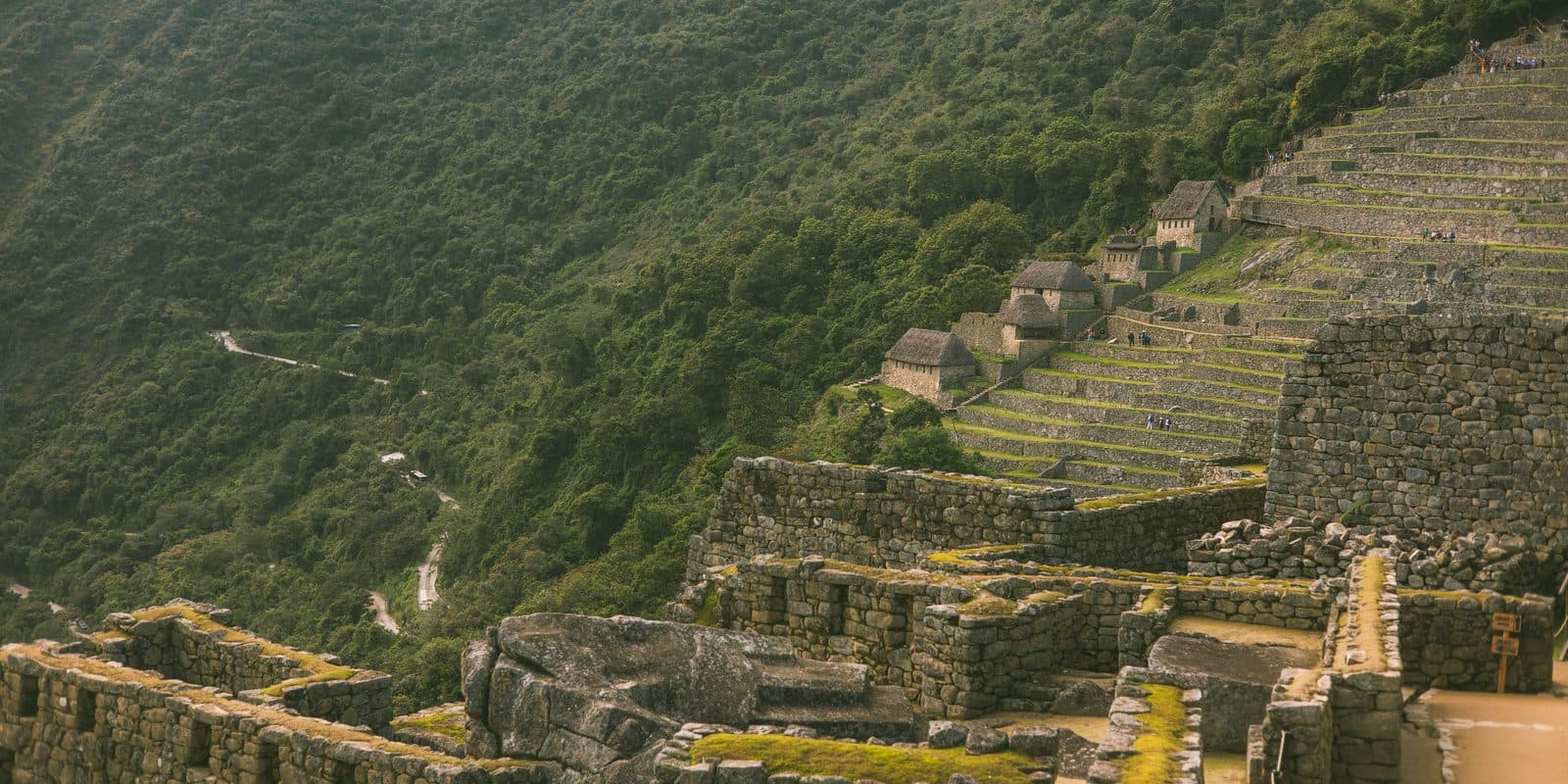
Yes, you need a ticket — and three things follow from that
Machu Picchu is not a park you wander into. It is a protected archaeological site with a legal daily capacity, a one-way flow of visitors, and a named ticket that is checked against your passport at the gate. Three consequences matter before any detail. First: because entry is capped, the ticket — not the flight, not the hotel — is the scarcest piece of a Peru trip, and the piece your dates should bend around. Second: because tickets name a circuit, what you see is decided at the moment you choose, not at the site; two travelers on the same morning can have almost non-overlapping visits. Third: because everything is nominal and dated, the classic rescue moves — swapping with a friend, selling a spare — simply do not work here.
None of this is meant to intimidate. The system is actually more legible than it was years ago: one official platform, published quotas, published prices. What trips people up is outdated information — the rules changed substantially in June 2024, and capacity and tariffs are set year by year. Everything below was checked on August 31, 2026, and where a figure could move, we say so.
One official place, and a field of lookalikes
All online sales run through a single platform operated by Peru's Ministry of Culture: tuboleto.cultura.pe. That is the entire list. There is no second official site, no authorized global reseller, no "partner portal". The confusion exists because a dozen polished commercial sites rank ahead of the real one and sell the same entry with a service margin — some of them honestly, marking the difference, and some dressed up to look like the ministry itself. The tell is always the domain: if it does not end in cultura.pe, it is an intermediary.
The platform sells by destination (look for Llaqta Machupicchu — llaqta is Quechua for city), then by circuit, route, date, entry hour and visitor type. Payment is online, the ticket is a PDF, and the name on it must match the passport you carry to the gate — for every traveler in the group, children included. Set aside twenty minutes: the site asks you to create an account, and on the first pass the circuit names mean nothing, which is what the next section fixes.
The three circuits, the ten routes, and what each one sees
Since June 1, 2024, the site is visited along three circuits subdivided into ten routes — a conservation measure that turned one crowd into ten thin streams. Each route is one-way, each keeps to its own zones, and your ticket names exactly one. The official names below are as listed on the ministry's platform, checked on August 31, 2026.
| Route | What it sees | Time inside | Best for |
|---|---|---|---|
| 1-A · Machupicchu Mountain | Upper terraces + the long climb to the summit facing the Salkantay range. No urban sector. | 4–5 h | Strong legs, big-landscape people |
| 1-B · Upper terrace | The postcard viewpoint and upper agricultural zone. Short, gentle, no urban sector. | 1.5–2 h | Photo-first visits, limited mobility |
| 1-C · Intipunku gate (high season only) | Walk up to the Sun Gate — the Inca Trail's arrival balcony — and back along the ridge. | 3–4 h | Hikers who want the Trail's view |
| 1-D · Inka Bridge (high season only) | Short cliff-side path to the stone-and-timber bridge over the Vilcanota drop. | 2–2.5 h | A quieter, stranger corner |
| 2-A · Classic designed route | The full experience: upper viewpoint, then down through the urban sector — Temple of the Sun, plazas, Intiwatana. | 2.5–3 h | First visits. This is the one that sells out first. |
| 2-B · Lower terrace | Same spirit as 2-A from a lower balcony, full urban sector walk. | 2.5–3 h | First visits when 2-A is gone |
| 3-A · Waynapicchu Mountain | Lower urban sector + the steep, famous climb up the sugarloaf in every photo's background. | 3.5–4.5 h | The bucket-list climb; tiny quota, earliest sellout |
| 3-B · Royalty designed route | The lower city in depth — royal residences, Temple of the Condor — without the viewpoint above. | 2.5 h | Second visits, archaeology-first eyes |
| 3-C · Gran Caverna (high season only) | Long descent to the Temple of the Moon cave on Waynapicchu's far side. | 4–5 h | Repeat visitors who want solitude |
| 3-D · Huchuypicchu (high season only) | Lower city + the small hill beside Waynapicchu — a gentler taste of the same view. | 3 h | The climb feeling without the vertigo or the early sellout |
Route names and their high-season-only availability were taken directly from the official platform on August 31, 2026; durations are practical ranges, not regulation. The pattern worth memorizing: Circuit 1 is views without the city, Circuit 2 is the view plus the city, Circuit 3 is the city plus the mountains. If it is your first time and you are not climbing anything, you want Circuit 2 — and so does everyone else, which is the next section's problem.
How many tickets exist each day
The ministry sets capacity annually. For 2026, resolution RM 285-2025-MC fixed the daily ceiling at 5,600 visitors on peak dates — January 1, Holy Week (April 2–5), the long dry-season block from June 19 through November 2, and December 30–31 — and 4,500 on every other day (checked August 31, 2026). Those totals are split across the ten routes, which is why "tickets available" and "the ticket you want available" are different questions: the site can show thousands of spaces left while route 2-A at 8 a.m. has none.
Two other numbers shape your odds. Waynapicchu's climb (route 3-A) admits around 350 people per day in two morning groups — a rounding error against 5,600, which is why it disappears first. And up to 1,000 tickets of the daily total are reserved for in-person sale in Machu Picchu Pueblo rather than online — the safety valve we cover below. (Both figures checked August 31, 2026; quota splits are the part of this system the ministry adjusts most often, so treat the exact numbers as this year's, not forever's.)
When sales open, and how far ahead you actually need to be
The whole 2026 calendar went on sale on November 17, 2025, in a staggered release over several days (checked August 31, 2026). In practice that means that by the time most travelers start planning, the calendar has been open for months — the question is not when sales open but how much is left for your week.
Honest advance-planning math, from the sellout patterns above: for June through October, secure entry two to three months ahead for Circuit 2, and four or more for Waynapicchu. For November through April (except Christmas, New Year and Holy Week), two to four weeks is usually comfortable, and same-week works more often than not — the 4,500-a-day floor is generous when the crowds thin. Either way, the sequence that saves trips is: ticket first, then train, then everything else. The reverse order is how people end up in Cusco with hotels booked and no way through the gate on the one day that mattered.
Sold out? The honest playbook
First: no one "gets you in" when the quota is gone. Anyone promising otherwise is selling either a different route than you asked for or a problem. What actually works, in order of dignity:
Switch routes. 2-A gone rarely means 2-B gone — and 2-B sees the same city from a slightly lower balcony. In high season, routes 1-C, 1-D, 3-C and 3-D open up precisely to absorb demand, and Huchuypicchu (3-D) is a genuinely lovely consolation for a missed Waynapicchu. Switch hours. The romantic 6 a.m. slots go first; early afternoon regularly has space on the same route, and afternoon light on the terraces is its own argument. Switch days if your itinerary has any slack — availability can differ wildly across two adjacent dates. And the true last resort: the in-person block. Up to 1,000 tickets per day are sold physically at the Centro Cultural in Machu Picchu Pueblo, from the previous afternoon, for next-day entry, one per person with ID — and the official platform now shows that counter's availability in real time, so you can check before betting a night on the line (checked August 31, 2026). In green season this is a real path. In July it is a 4 a.m. queue and a coin flip.
What is never on the list: buying someone's "spare". Tickets are nominal — the passport check at the gate is precisely the mechanism that killed the resale market, and a ticket with someone else's name on it is a souvenir, not an entry.
Do you need a guide? What the rule says, and what the gate does
This is the question with the messiest answer, so here it is in layers. The visitor regulation for the site — the same body of rules that created the circuits — formally provides for entry with an official guide, and tour literature repeats it as an absolute. At the gate, in practice, independent travelers with a valid ticket are not turned away for arriving guideless, and the ministry's own platform sells tickets to individuals with no guide attached (checked August 31, 2026). For the mountain routes — Waynapicchu, Machupicchu Mountain, Huchuypicchu — a guide is not required even formally. There is also a small courtesy in the rules: if you did enter with a guide, you may return the following shift or day showing the same ticket, without hiring again.
Our honest read: treat the guide question as an experience decision, not a compliance one. The site has almost no interpretive signage — what the buildings are, why the windows face where they face, none of it is written down inside. A good guide (there are excellent independent ones at the gate and far better ones arranged ahead) turns stones into a city. But go in knowing it is your choice — and if a seller insists the law obliges you, now you know the fuller picture.
Huayna Picchu and Machupicchu Mountain: the separate game
The two big climbs are not add-ons you improvise at the gate — they are their own routes with their own tickets, prices and quotas. Waynapicchu (route 3-A) is the steep green sugarloaf behind the city in every classic photo: about an hour up narrow Inca stairs, a summit that feels like a balcony bolted to the sky, and a descent that asks for both hands. Roughly 350 people per day get to do it, in two morning groups, and in dry season those spaces are gone months out (checked August 31, 2026). It shares its ticket with the lower urban sector — a real visit, but not the full Circuit 2 walk, which is a fair trade most climbers accept knowingly.
Machupicchu Mountain (route 1-A) is the opposite profile: the taller, broader mountain the city actually sits on, a longer but less vertiginous climb, a summit view that swallows the whole sanctuary with the Salkantay snows behind. Its quota is larger and it survives longer before selling out — the considered choice for people who want a summit without Waynapicchu's exposure. Know that the big-mountain routes close seasonally for trail maintenance: at the time of checking (August 31, 2026), the operator-published calendar had routes 1-A and 1-D closed from mid-October to late December. If a climb is the point of your trip, confirm the route is open for your dates on the official platform before anything else gets booked.
Official prices, in soles, dated
Tariffs are set by the ministry (for 2026, resolution RM 284-2025-MC) and are charged in Peruvian soles. What a foreign traveler actually pays, checked against the official schedule on August 31, 2026:
| Ticket | Foreign adult | Foreign student | Child 3–17 |
|---|---|---|---|
| Standard circuits (1-B/C/D, 2-A/B, 3-B/D) | S/ 152 (≈ US$ 42) | S/ 77 | S/ 70 |
| With a mountain (1-A, 3-A) or Gran Caverna (3-C) | S/ 200 (≈ US$ 55) | S/ 118 | S/ 118 |
Citizens of Peru and the Andean Community (Bolivia, Colombia, Ecuador) pay a reduced schedule — S/ 64 adult on standard circuits, S/ 112 with a mountain, checked August 31, 2026. Children under 3 enter free with a documented adult. And note one genuinely new line item: from May 1, 2026, SERNANP — the protected-areas service — adds a small conservation fee on top of every entry, S/ 11 for foreign visitors (checked August 31, 2026). Prices on intermediary sites run higher than all of the above; the difference is their service margin, not a different ticket.
What your ticket does not include
The entry is only the last door. Getting to that door is its own small logistics chain — Cusco or the Sacred Valley, then the train to Machu Picchu Pueblo, then the switchback bus up to the gate — and none of it is bundled with the ticket. We walk the whole chain, with times and costs, in how to get to Machu Picchu; and if the rails are half the romance for you, the luxury trains are their own story. Budgeting the full day — entry, train, bus, guide, lunch — is exactly what our Machu Picchu price page exists for.
Buying on the platform, step by step, without the headache
The official site is functional but bureaucratic, and knowing its quirks ahead saves real frustration. The sequence: create an account first (email confirmation included — do this before the night the family gathers to decide dates). Then find Llaqta Machupicchu under Cusco — not "Machu Picchu"; the platform uses the Quechua name. The form walks you down five choices in strict order: circuit, route, date, entry hour, and origin of each traveler; the tariff only appears once every field is filled, which feels broken but is just how it behaves. Dates with no remaining space for your route simply show no hours — the site rarely says "sold out" in so many words.
At payment, have every traveler's passport at hand: numbers, names as written, birth dates. This is where the trip's most fixable mistake happens — a name typed from memory that does not match the document — and where it is cheapest to prevent. The ticket arrives as a PDF; save it offline, because Machu Picchu Pueblo's connectivity is best described as moody. Print is not required, but a dead phone at the gate has ruined better planned mornings than yours.
Which entry hour to pick — the choice inside the choice
Entry runs in one-hour windows from 6 a.m., and the instinct to grab the earliest is not always right. The 6 a.m. slot rewards you in dry season: low sun, long shadows on the terraces, the city filling slowly beneath you. In the green months (November–April) that same hour often opens onto solid mist that burns off by 9 — atmospheric, yes; photogenic, eventually. The 8-to-10 windows are the crowd's center of gravity because they line up with the morning trains. The quiet money is on early afternoon: the tour-group wave has receded, the light warms, and those windows are routinely the last to sell out — which makes them both the connoisseur's pick and the fallback that saves a late-planned trip. One structural note: whatever the hour, the visit is one pass, so eat first and carry water — small bottles are allowed, picnics are not.
The Inca Trail is a different ticket entirely
A recurring confusion worth clearing: hiking the Inca Trail does not involve buying a Machu Picchu entry on this platform. Trail permits are their own system — same ministry, separate quota, sold through licensed trekking operators rather than to individuals, and they sell out even earlier than Waynapicchu for the dry season. The permit includes the arrival into the site through the Sun Gate. If your plan is boots-first, the trail permit is the document to chase, months ahead; if your plan is rails-first, everything in this article is your system. The two meet at the same terraces either way — the 14-day itinerary shows how a trek folds into a longer route without rushing either.
The classic mistakes, so you can skip them
Booking the train before the entry. The scarce item first — always. Ignoring the hour math. Entry windows are enforced, and the bus line at 7 a.m. in July eats forty minutes; work backwards from your gate hour. A name that does not match the passport. The ticket is nominal and the gate checks; a typo at purchase is fixable through the platform, but not at the gate at dawn. Assuming you can re-enter. The circuits are one-way, exit is final, and the bathrooms are outside the gate — plan both accordingly. Forgetting the children. Under-3s enter free but still need the document that proves the age; 3-year-olds and up need their own ticket. Trusting a lookalike site under deadline pressure. When the official platform shows zero and a commercial site shows "available!", that availability is usually a different route or a different hour — read the fine print before relief clouds judgment. And the quiet one: assuming this year's rules are last year's. Circuits, quotas and tariffs are annual decisions here; every figure above carries its date for exactly that reason.
Documents, children and the fine print at the gate
The gate checks originals, not photos: carry the same passport the ticket was issued against, for every traveler including the children. Student pricing requires a valid university card presented both at purchase and at entry — a graduation-year card that has lapsed is the classic gate-side dispute, and the gate wins. Children aged 3 to 17 need their own named ticket at the child rate; under-3s enter free but bring the document that proves the birthdate, because the person asking is not obliged to take your word for it. Andean Community citizens claiming the reduced tariff show the national ID or residence card of Peru, Bolivia, Colombia or Ecuador. None of this is onerous — it is one folder in a daypack — but the site sits a train and a bus past the last place you can fix a missing paper, which is the entire reason to read a paragraph this dull before traveling.
How we handle tickets inside a designed trip
When we design a travesía that includes Machu Picchu, the entry is part of the design, not an errand we leave you: we secure the circuit that fits your plan under your own name — which is why the checkout asks for each traveler's passport details — and the day is built backwards from the gate hour, train and bus included, so the hour math above is our problem, not yours. What that full day looks like and what it runs is on the Machu Picchu price page; how it sits inside a whole route is easiest to see in the 10-day itinerary or the 7-day classic journey.
Changes often: Circuits, quotas, tariffs and the guide rule are annual decisions of Peru's Ministry of Culture. Every figure in this article was verified on August 31, 2026 against the official platform (tuboleto.cultura.pe) and the ministry's published resolutions (RM 284-2025-MC and 285-2025-MC). If you are reading this for a trip after 2026, the shape of the system will very likely be intact — but confirm the numbers on the official platform before locking dates.
Tell Maia your dates and we will take it from there
Maia is our planning assistant. Tell her when you land, how long you have and what you care about — hiking, food, quiet, comfort — and she will sketch a day-by-day itinerary in minutes. A person on our team in Peru checks it before anything is confirmed.
Start planning your tripFrequently asked questions
- Do you need tickets for Machu Picchu?
- Yes — every person who walks through the gate needs a named, dated, timed entry ticket for a specific circuit, and there is a daily cap on how many exist: 5,600 on peak dates and 4,500 the rest of the year (checked August 31, 2026). Nothing is sold at the gate itself. The only official sales channel is the Ministry of Culture's platform, tuboleto.cultura.pe, plus a limited in-person window in Machu Picchu Pueblo.
- What is the official website for Machu Picchu tickets?
- tuboleto.cultura.pe — the Ministry of Culture's own platform. It is the only place tickets are issued online; every other site you will find is an intermediary layering its own fee on top. If a page is not on the cultura.pe domain, it is not the official channel, however official it looks.
- How far in advance should you get Machu Picchu tickets?
- For June through October — the dry season and the busiest months — plan on securing entry two to three months ahead, and four or more if you want Huayna Picchu, whose daily quota is a few hundred people. In the November-to-April green season, two to four weeks ahead is usually comfortable for the classic circuit, except around holidays. The whole 2026 calendar went on sale on November 17, 2025 (checked August 31, 2026).
- Do you need a tour guide for Machu Picchu?
- The official visitor regulation formally provides for guided entry, but in practice the gate does not require you to arrive with a guide, and for the mountain routes (Huayna Picchu, Machu Picchu Mountain, Huchuypicchu) a guide is not required even on paper (checked August 31, 2026). A good guide genuinely transforms a first visit — the site has almost no signage — but that is a choice, not a gate rule.
- Which Machu Picchu circuit is best for a first visit?
- Circuit 2, and specifically route 2-A, the classic designed route. It is the one that combines the postcard viewpoint from the upper agricultural zone with a full walk through the urban sector below — temples, plazas, the Intiwatana. That is exactly why it sells out first: when people picture Machu Picchu, they are picturing what Circuit 2 sees. If 2-A is gone for your date, route 2-B covers the same city from a slightly lower balcony and is the closest substitute; Circuit 1 gives you the view without the city, Circuit 3 the city without the view.
- How much do Machu Picchu tickets cost?
- The official price for a foreign adult on the standard circuits is S/ 152 (about US$ 40–45); adding Huayna Picchu or Machu Picchu Mountain raises it to S/ 200. Children aged 3–17 pay S/ 70 and students with a valid card S/ 77. Andean Community citizens and Peruvians pay reduced rates. From May 1, 2026 a small SERNANP conservation fee is added on top (checked August 31, 2026, tuboleto.cultura.pe tariff schedule per RM 284-2025-MC).
- Can you buy Machu Picchu tickets in person or last minute?
- Yes, with caveats: a block of up to 1,000 tickets per day is held for in-person sale at the Centro Cultural in Machu Picchu Pueblo, sold from the afternoon before for next-day entry, one per person with ID (checked August 31, 2026). The official platform now publishes that counter's remaining availability in real time, so check it before committing a night to the line. In green season this works as a genuine last-minute route; in dry season the queue forms before dawn and the block can be gone quickly. It is a fallback, not a plan — and it decides your route for you, since only what is left is on sale.
- Can you re-enter Machu Picchu with the same ticket?
- No — the circuits are one-way and your ticket covers a single pass through the gate in your entry window. Once you exit, you are out; there are no bathrooms inside, so use the ones by the entrance first. The narrow exception: visitors who toured with a guide can return on a following shift or the next day by showing the earlier ticket, under the re-entry provision of the visitor rules.
Keep reading
- Planning a Trip to Peru: Everything You Need to KnowPeru looks simple on a map. Then you add altitude, trains, entry caps and three different climates. Here is the whole plan, in the order that works.
- The Best Time to Visit Peru: A Month-by-Month GuideThere is no single best season for Peru — Lima, the Andes and the Amazon run on three different calendars. Month by month, here is how to choose.
- Cusco Altitude: How to Prepare Without Letting It Ruin Your TripEveryone worries about Machu Picchu's altitude. Almost nobody realizes Cusco is a thousand meters higher. That mix-up is fixable — with the itinerary.
- Sacred Valley vs Cusco: Where Should You Stay First?Where you sleep on night one in the Andes decides how you feel for the next three days. The answer is not the famous city.