What Is the Sacred Valley in Peru? (And What It's Not)
August 31, 2026 · 20 min read
Every Peru itinerary you have read mentions the Sacred Valley. Almost none of them pause to say what it actually is — a river? a region? a collection of ruins? — and the confusion is not harmless. People skip it because they assume it is a scenic drive. People sleep in the wrong place because they assume Machu Picchu is in it. People arrive gasping in Cusco because nobody told them the valley is where you are supposed to land softly.
What the Sacred Valley actually is
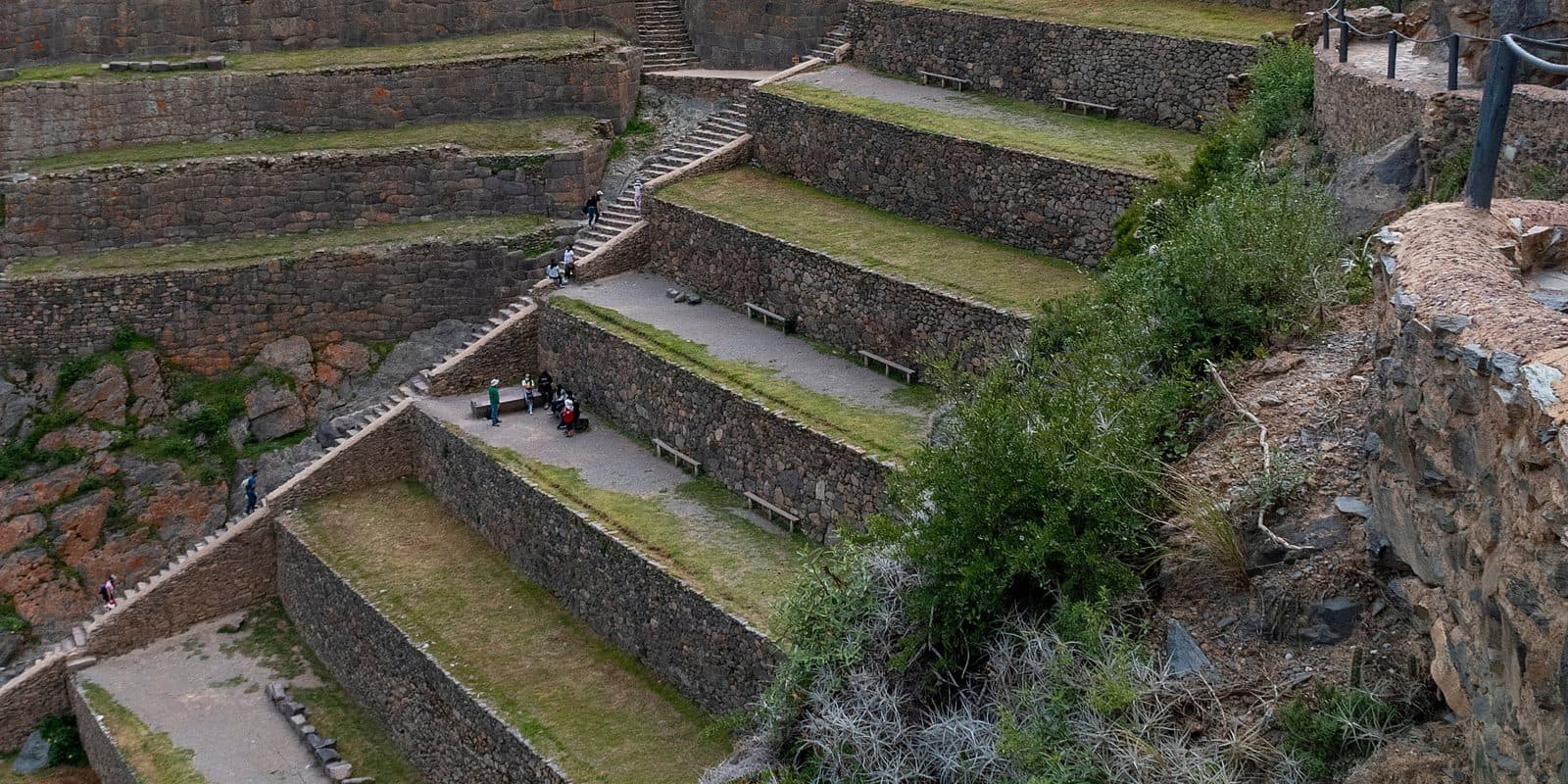
Geography first, because everything else follows from it. The Urubamba river — called the Vilcanota upstream — cuts a broad, flat-bottomed valley through the Andes about an hour north of Cusco. Between Pisac at the eastern end and Ollantaytambo at the western end, the floor runs wide, green and astonishingly fertile: this is corn country, and the giant white-kernel corn of the valley, choclo, was imperial treasure. The Incas terraced the slopes wall to wall, planted their finest estates here, and read the river as a mirror of the Milky Way — sacred in the literal sense, not the brochure sense.
The numbers a traveler needs: the valley floor sits between roughly 2,790 m at Ollantaytambo and 2,970 m at Pisac — call it 2,800 and you will not be far wrong anywhere you sleep. That is about 500 m lower than Cusco, and at these altitudes 500 m is not a statistic, it is how your head feels at three in the morning. The air is thicker, the nights are milder, and the valley grows eucalyptus and corn where Cusco grows only grass.
What it is not — starting with Machu Picchu
Say it plainly: Machu Picchu is not in the Sacred Valley. It lives on the same river, which is exactly why the confusion exists, but it sits about 30 km beyond Ollantaytambo as the rails run — past the end of the valley proper, where the Urubamba narrows into a gorge and the Andes begin their long fall toward the Amazon basin. Peruvians call that zone the ceja de selva, the jungle's eyebrow: at 2,430 m, Machu Picchu is lower, wetter and greener than anywhere in the valley, wrapped in cloud forest rather than corn terraces. No road reaches it. From the valley you continue by train — the full journey, fares included, is its own story, told in our guide to how you actually get to Machu Picchu.
Cusco is not in the valley either. The imperial capital sits on a high plateau at about 3,400 m, separated from the valley by a ridge; you cross it in 45 minutes to an hour of winding road. Think of them as two rooms of the same house: the valley is the garden level, Cusco is the rooftop. You will want both — in the right order.
Sacred Valley vs Cusco: the table that settles it
This is the comparison that decides where you sleep, and it is worth getting right before any itinerary hardens.
| Sacred Valley (floor) | Cusco | |
|---|---|---|
| Altitude | ≈ 2,800 m (Ollantaytambo 2,792 m) | ≈ 3,400 m |
| How it feels on arrival | Noticeable but gentle — most people feel normal after a nap | Headaches and short breath are common the first two days |
| Climate | A few degrees warmer; milder nights, sheltered floor | Colder nights year-round, near freezing June–July |
| Pace | Rural: fields, markets, small towns, early nights | Urban: colonial streets, museums, restaurants, nightlife |
| Best used for | First nights (acclimatize low), the towns and terraces, the train to Machu Picchu | After the valley: the city deserves you at full lung capacity |
Why you sleep in the valley first
Here is the logic, free of salesmanship, because it is just physiology. Altitude sickness — soroche — correlates with how high you sleep, not how high you stand during the day. Land in Cusco and drive straight down to the valley, and your first nights happen at 2,800 m instead of 3,400 m: your body does its adjusting while you dream, and the 600-meter difference is roughly the difference between a soft first morning and a pounding one. After two nights that low, the climb to Cusco's altitude is old news.
The geometry agrees with the physiology. The valley is where the Machu Picchu trains leave from, so sleeping there turns the big day into an early start instead of a pre-dawn odyssey from Cusco. That is why our classic route lands in Cusco and drives directly to a valley hotel without stopping in the city — the same order this article is giving you for free, and the same rule our planning engine enforces: at least two nights sleeping at altitude before any high-altitude hike gets scheduled.
The towns, one by one
The valley is not a single sight; it is a string of small towns, each with its own reason to exist. Here they are from east to west, with honest time budgets.
Pisac — the market and the hilltop city
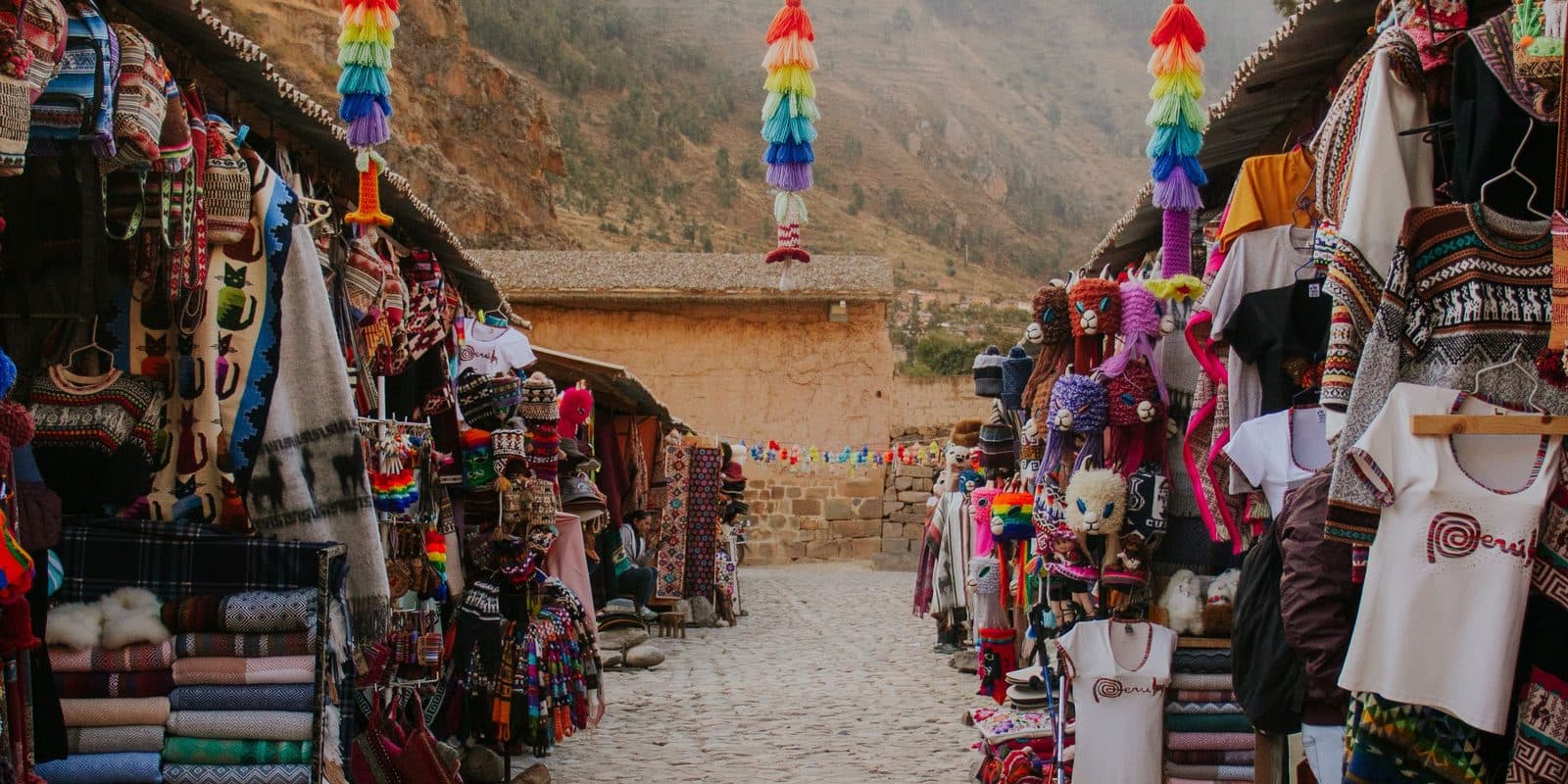
At the eastern gate of the valley, under a hillside so terraced it looks pixelated, Pisac leads two lives. Below: the most famous artisan market in the region, daily now, at its traditional best on Sunday mornings when families walk in from the high villages. Above: a full Inca city — temples, baths, storehouses and a wall of tombs — that most people skip because they only budgeted an hour for the stalls. Give Pisac half a day: morning for the ruins, midday for the market and a slow lunch on the plaza.
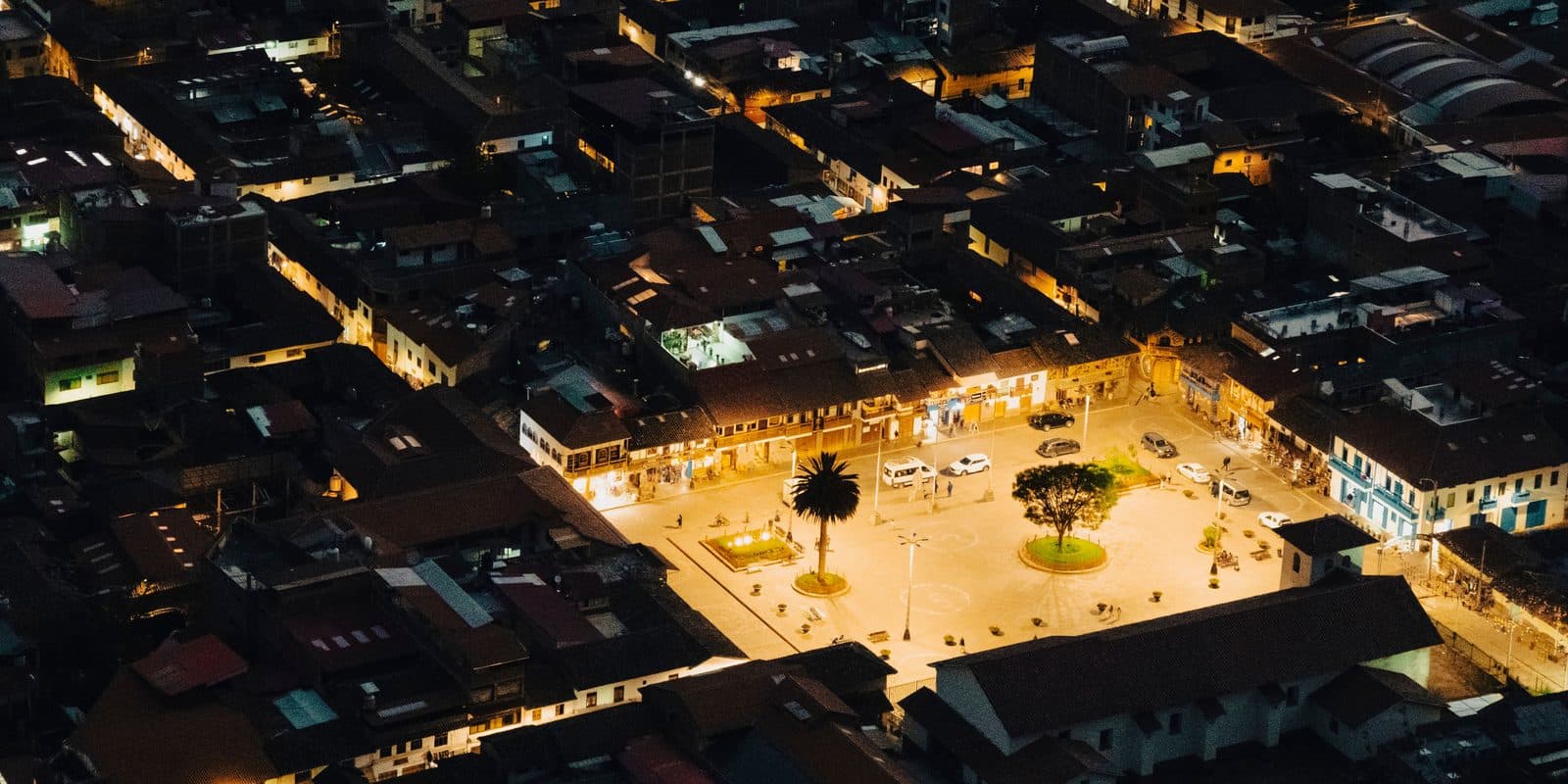
The plaza at night, once the day-trippers are gone, is one of the valley's quiet pleasures — a small town squaring its shoulders under very big mountains.
Urubamba — the hub you sleep in, not the sight you see
Mid-valley, Urubamba is the working capital: the biggest town, the best-stocked market for actual groceries, and the highest concentration of hotels from family guesthouses to the valley's famous luxury properties. It has no major ruin, and that is fine — its job is location. From Urubamba everything in the valley is twenty to forty minutes away, which is why so many good trips use it as the bedroom. Horseback mornings between the cornfields and quiet afternoons by the river are its genuine local pleasures.
Two practical notes for Urubamba. First, this is where the valley's daily life is most visible — the produce market in the morning is worth thirty minutes even if you have no kitchen to shop for, because it shows you what the terraces still grow: a dozen kinds of corn, potatoes in colors that surprise first-timers, mountains of herbs whose names your guide will enjoy teaching you. Second, the town's unremarkable center is precisely why hotel gardens here feel like sanctuaries; the valley's calm is behind the walls, not on the main street, and knowing that saves a first-evening disappointment.
Ollantaytambo — the living Inca town
The western anchor, and the only town in Peru where you sleep inside an Inca street plan that never stopped being used: water still runs down the stone channels, and the house foundations are the original masonry. Above the plaza rises the fortress-temple — a giant staircase of terraces crowned by monoliths that were never finished, because this is where the empire made one of its last stands. Give it a full afternoon and stay for the evening: Ollantaytambo is also the valley's train station, which makes it the natural last stop before Machu Picchu.
Chinchero — the high plateau weaving town
A confession that makes this guide more useful: Chinchero is not technically in the valley. It sits on the cold plateau above it, at 3,754 m — higher than Cusco — looking down over everything. It belongs to any honest valley day anyway: this is the weaving capital of the region, where cooperatives of weavers demonstrate the whole craft from shearing to natural dyes, and where a colonial church stands on Inca foundations beside a Sunday market older than the conquest. Dress warmer than you did on the valley floor; the altitude is real, so keep Chinchero to a passing stop rather than a long hike on your first days.
Maras and Moray — salt and circles
Two sights, one detour, also up on the plateau. Moray is a set of enormous circular terraces sunk into the earth like an amphitheater — most convincingly explained as an Inca agricultural laboratory, its concentric rings creating measurably different microclimates from top to bottom. Twenty minutes away, the salt ponds of Maras spill down a hillside in a mosaic of three thousand shallow pools, harvested by local families since before the Incas; the salty spring that feeds them has never stopped. Together they make a superb half day, usually folded into the drive between Cusco and the valley — which is exactly how our classic route uses them.
The weather, month by month
The valley has two seasons, and the honest month-by-month looks like this:
| Months | Season | What it means on the ground |
|---|---|---|
| May – September | Dry season | Brilliant sun, 20–22 °C days, cold clear nights (near freezing June–July). Peak visibility, peak crowds. |
| November – March | Rainy season | Green hills, afternoon downpours, milder nights. February is the wettest — the Inca Trail closes that month. |
| April & October | Shoulder | The quiet sweet spot: landscapes still green, rain retreating, fewer people at the big sites. |
Two footnotes worth their space. First, "rainy season" means afternoon rain, not forty days of drizzle — mornings are often glorious, and the valley in January is greener than most people will ever see it. Second, the valley floor runs a few degrees warmer than Cusco in every month, one more small argument for sleeping low. For the full picture across the whole country, our guide to the best time for a Peru trip has the month-by-month table.
Getting there and getting around
From Cusco's airport, the valley is 45 minutes to an hour by road, depending on which end you aim for: over the Chinchero plateau to Urubamba and Ollantaytambo, or down the winding eastern road to Pisac. There is no useful public transport for a first-time traveler with luggage; a private transfer is the sane way in, and any good trip design includes it. The drive itself is part of the arrival: within twenty minutes of the terminal you are on open altiplano among grazing alpacas, and the first sight of the valley from the plateau rim — two thousand feet of terraced wall dropping to a green floor — is the moment most travelers date the trip from.
Inside the valley, distances are mercifully short: Pisac to Urubamba about 45 minutes, Urubamba to Ollantaytambo about 25. The rhythm that works is one base, day loops around it. And when Machu Picchu day comes, the train leaves from Ollantaytambo — the reason the valley is the natural staging ground. The complete route from Lima to the citadel gate, leg by leg with times and fares, lives in our Machu Picchu route guide; if the rails themselves tempt you, there is also the luxury train, honestly reviewed.
How many days does the valley deserve?
Two nights minimum. Three if you can. The arithmetic: one afternoon to arrive and exhale, one full day for the towns — a Pisac morning, an Ollantaytambo afternoon, or the Chinchero–Maras–Moray plateau loop — and the second night that lets your blood do its quiet altitude work before Cusco. With three nights the valley stops being logistics and starts being the part of the trip people talk about at dinner parties: a horseback morning between cornfields, a weaving workshop where the dye pots are actually boiling, an unhurried second market.
What we push back on, gently but firmly: the drive-through version, where the valley is a photo stop between Cusco and the train. It sells the best-proportioned landscape in the Andes short, and it wastes the altitude gift. The valley is not on the way to the trip. It is the trip, arriving.
One more audience deserves a word: the valley is the most forgiving part of the Andes for travelers who move slowly — small children, grandparents, anyone for whom 3,400 m sounds like a dare. The altitude is gentler, the distances are short, the animals are everywhere (alpacas win over toddlers reliably), and every town has a plaza where doing nothing is the local sport. Families who structure the whole trip around valley nights, dipping into Cusco for a day rather than sleeping there, consistently report the easiest version of Peru.
Tickets and practicalities
The archaeological sites — Pisac, Ollantaytambo, Chinchero, Moray — share Cusco's regional entry ticket (the Boleto Turístico): the valley circuit version runs about S/70 and the full ten-day version about S/130 as of our August 2026 check. The Maras salt ponds are community-run and take a separate small entry of about S/20, worth every sol. On any well-built trip the tickets are handled for you; on your own, carry cash in soles — the ticket booths are cheerfully analog.
Our own pricing for the valley's classic day, private and shared, is public — the Sacred Valley day, priced both ways, along with Maras & Moray and Pisac and its market — because a valley this good deserves numbers in the open.
The order that makes sense
The towns reward a sequence, and the sequence follows the map. If you are arriving from Cusco's airport — the standard case — the elegant route crosses the Chinchero plateau, so the plateau sights come first while you are already up there: Maras and Moray as a two-hour pair, Chinchero's weavers if the timing is kind, then the long descent to your valley hotel with the afternoon dissolving into corn fields. That single drive, done unhurried, is one of the best half days in Peru, and it costs you no extra kilometers: it is simply the way down, taken properly.
With one full valley day, split it east and west: Pisac in the morning — ruins first, before the sun and the buses, market after — then cross the valley for Ollantaytambo in the afternoon, ending at the fortress when the light goes gold. With two days, unhook the pairing: give Pisac its slow lunch and plaza evening, give Ollantaytambo its own afternoon and stay for dinner in the old town, and spend the spare morning on whatever the first pass flagged — the weaving cooperative, the horseback loop, the second market. The one ordering rule that never bends: whatever the sequence, Ollantaytambo goes last if tomorrow is Machu Picchu, because the station is there and the morning train waits for no one.
Festivals bend every schedule, pleasantly. Around the winter solstice in June the whole region tilts toward Cusco's Inti Raymi, and the valley towns hold their own smaller processions; Ollantaytambo's Señor de Choquekillka festival — several days of masked dancers, brass bands and cascarón confetti at the end of May or early June — turns the living Inca town into proof of the adjective. If your dates brush one of these, rearrange the days around it and thank yourself later.
Why "sacred"? A short history
The name is not tourism-board poetry; it is a fair translation of how the Incas treated the place. The Vilcanota–Urubamba was a holy river, read as the earthly twin of the Milky Way, and the valley it watered was the empire's finest farmland — the source of the maize that fed state ritual as much as state stomachs. Emperors built their private estates here the way later kings built summer palaces: Pisac is attributed to Pachacutec, the ruler who turned a highland kingdom into an empire, and Ollantaytambo to the royal works that followed. Terraces were not just engineering, they were theology — a way of ordering a vertical world.
When the conquest came, the valley was where resistance made its stand: Manco Inca defeated a Spanish force at Ollantaytambo in 1537 — one of the very few pitched battles the conquistadors lost — before retreating downriver into the cloud forest. The towns that remain are layered accordingly: Inca foundations, colonial churches, contemporary markets, all in use at once. Nothing in the valley is a museum piece; that is rather the point of it.
Beyond the ruins: what you actually do here
The terraces and temples are the postcard, but the valley earns its days with what happens between them. It is the region's open-air playground: a via ferrata climbs the cliff face above the valley floor with zip lines for the way down — we publish its real price like everything else — and quieter appetites do mornings on horseback between the cornfields of Urubamba, paddle boards on the high lagoon of Piuray, or bicycle descents from the plateau past Maras into the fields.
The other register is human. The valley is where the Andean weaving tradition is not a demonstration but an economy: workshops in Chinchero where the dye pots are actually boiling, and full days with the community of Huilloc above Ollantaytambo, where lunch is what the family is eating and the looms are the household's real income. If the ruins tell you what the valley was, these days tell you what it is.
Eating in the valley
Corn country feeds you accordingly. The valley classics are humble and exact: choclo con queso, the giant-kernel corn with fresh cheese, sold at roadside stands that deserve your stop; earth-oven pachamanca when a festival or a good host provides the occasion; river trout everywhere, honest and cheap; and in season the roadside ovens of Urubamba selling lechón to Sunday families. A set-menu lunch in a town plaza runs a few dollars; the valley also hosts a handful of destination tables — gardens growing the tasting menu a few meters from it — for the night you want the other extreme. Neither is the wrong valley; alternate them.
Where to sleep, by style
Three honest patterns. Urubamba and its side lanes hold the widest choice, from family guesthouses under fruit trees to the valley's famous five-star haciendas — central, practical, quiet at night. Ollantaytambo suits travelers who want atmosphere over amenities and an early train: small hotels inside the Inca grid, the fortress lit above the rooftops. Around Pisac the draw is the eastern light and the retreat economy — yoga barns and garden lodges. Whichever you choose, the constant is the altitude dividend: every one of these beds sits roughly 500 m below Cusco, and your first mornings will thank you for it.
The mistakes we undo most often
A short honest list, from years of fixing other people's first drafts. Sleeping in Cusco first — covered above, still the king of errors. Giving the valley half a day: the drive-through sees terraces from a bus window and calls it done. Scheduling a high hike on arrival: lagoon treks at 4,200 m belong after two nights of sleeping at altitude, not before — our own planning rules refuse to place them earlier, and your head will endorse the policy. Treating Chinchero as "on the valley floor": it is higher than Cusco; go, but go acclimatized and warm. And skipping the night markets: the valley after the buses leave is a different, better place — as the plaza of Pisac at ten in the evening quietly proves.
Frequently asked questions
- What is the Sacred Valley in Peru?
- The Sacred Valley is the valley of the Urubamba river in the Andes northeast of Cusco, running roughly 60 km between the towns of Pisac and Ollantaytambo. It was the agricultural heartland of the Inca state — corn country, terraced wall to wall — and today it holds the region's best ruins outside Machu Picchu, its liveliest markets, and its most comfortable altitude for sleeping: the valley floor sits around 2,800 m, some 500 m lower than Cusco.
- Is Machu Picchu in the Sacred Valley?
- No. Machu Picchu sits further down the same river, past the end of the valley, where the Andes drop toward the edge of the Amazon — a zone Peruvians call ceja de selva, the jungle's eyebrow. It is about 30 km beyond Ollantaytambo as the rails run, at 2,430 m, and no road reaches it: from the valley you continue by train. Close cousin, different address.
- Is Cusco in the Sacred Valley?
- No — Cusco sits on a high plateau at about 3,400 m, a mountain ridge away from the valley. The drive from Cusco down to Pisac or across to Urubamba takes roughly 45 minutes to an hour. They are neighbors and you will use both; they are just not the same place, and the 500-meter difference in altitude changes how each one feels.
- What is the weather like in the Sacred Valley?
- Two seasons, not four. Dry season (May to September): brilliant sun by day, around 20–22 °C, cold clear nights that can approach freezing in June and July. Rainy season (November to March): green hills, afternoon downpours, milder nights; February is the wettest month. April and October are the lovely in-between. The valley floor runs a few degrees warmer than Cusco year-round.
- How many days do you need in the Sacred Valley?
- Two nights is the honest minimum: it gives you one full day among the towns and terraces plus the arrival afternoon, and it lets your body adjust to altitude at 2,800 m before sleeping higher in Cusco. Three nights is where the valley stops being a corridor to Machu Picchu and becomes a place you actually got to know.
- Should I stay in the Sacred Valley or in Cusco?
- First nights in the valley, then Cusco — in that order. The valley floor is about 500 m lower, so you acclimatize while sleeping instead of gasping through your first city walk. It is also where the Machu Picchu trains leave from. Cusco rewards you afterwards, once the altitude is old news.
- Which towns are in the Sacred Valley?
- The names that matter to a traveler: Pisac (market and hilltop ruins) at the eastern end, Urubamba (the hub where many hotels sit) in the middle, Ollantaytambo (living Inca town, fortress, train station) at the western end, plus Chinchero, Maras and Moray on the high plateau above the valley — technically overlooking it rather than in it, and part of any honest valley day.
- Is the Sacred Valley worth it, or just a stop on the way?
- Worth it on its own terms. The ruins at Pisac and Ollantaytambo are the best preserved in the region after Machu Picchu, the markets are where the weaving traditions actually live, and the valley is where you meet the Andes at a humane altitude. Travelers who race through it in half a day tend to say the trip started at Machu Picchu; travelers who slept there say it started in the valley.
Tell Maia your dates and we will take it from there
Maia is our planning assistant. Tell her when you land, how long you have and what you care about — hiking, food, quiet, comfort — and she will sketch a day-by-day itinerary in minutes. A person on our team in Peru checks it before anything is confirmed.
Start planning your tripPrefer to see the valley already placed in a full route? The classic Peru route sleeps in the valley first, exactly as this article preaches.
Planning the whole trip, not just this piece? See how it all fits together in our 10 day Peru itinerary or, with more time, the two-week route.
Keep reading
- Planning a Trip to Peru: Everything You Need to KnowPeru looks simple on a map. Then you add altitude, trains, entry caps and three different climates. Here is the whole plan, in the order that works.
- The Best Time to Visit Peru: A Month-by-Month GuideThere is no single best season for Peru — Lima, the Andes and the Amazon run on three different calendars. Month by month, here is how to choose.
- Cusco Altitude: How to Prepare Without Letting It Ruin Your TripEveryone worries about Machu Picchu's altitude. Almost nobody realizes Cusco is a thousand meters higher. That mix-up is fixable — with the itinerary.
- Sacred Valley vs Cusco: Where Should You Stay First?Where you sleep on night one in the Andes decides how you feel for the next three days. The answer is not the famous city.