



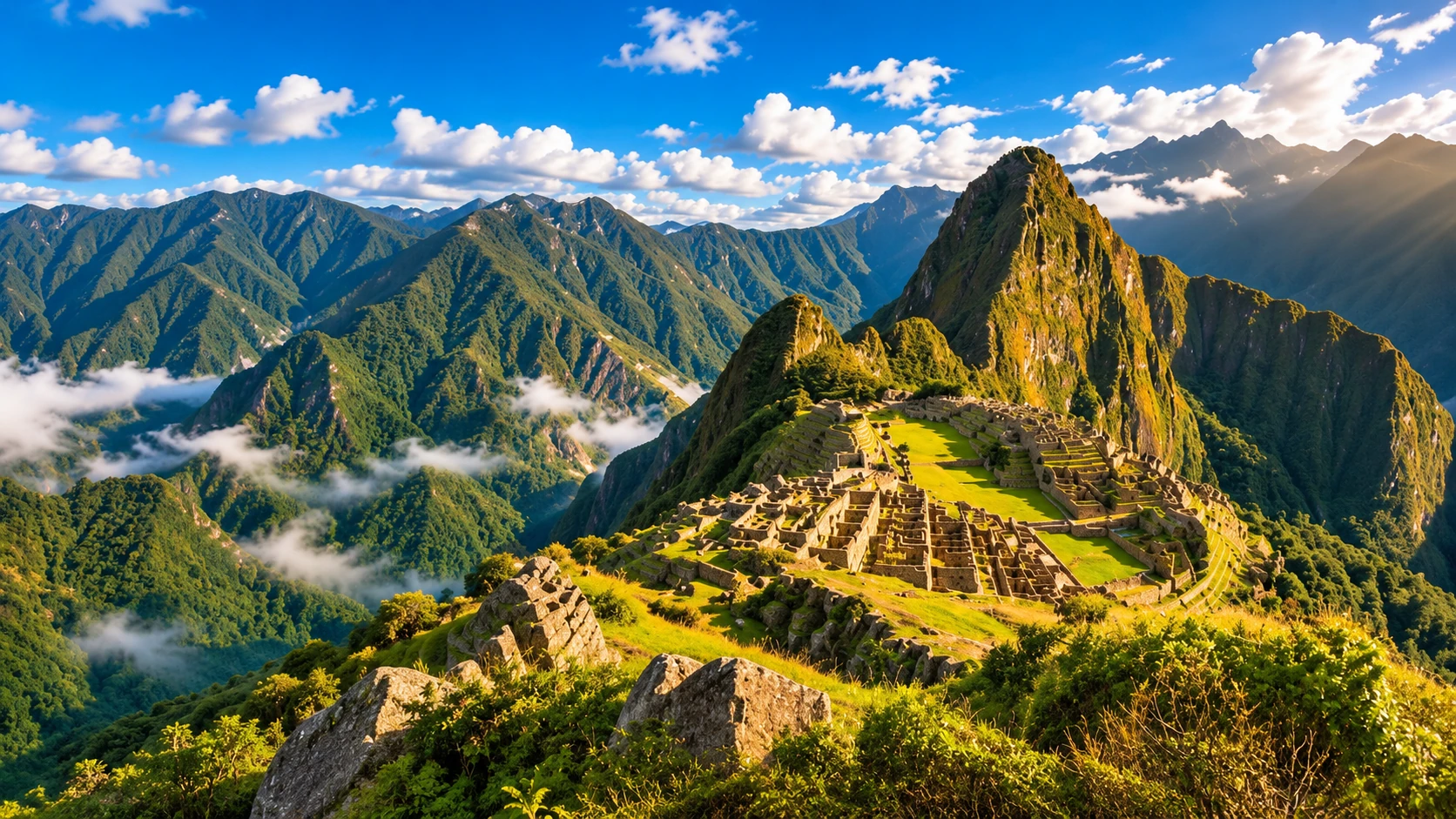
2 weeks in Peru: the complete 14 day itinerary, day by day
Ten days see Peru; fourteen days let Peru see you back. This is the two-week route we build when travelers want the core — Lima, the Sacred Valley, Machu Picchu, Cusco — at the pace those places deserve. Toggle it below for couples or families, in three styles, open any day, and when it feels like yours, take it into the planner and make it so.
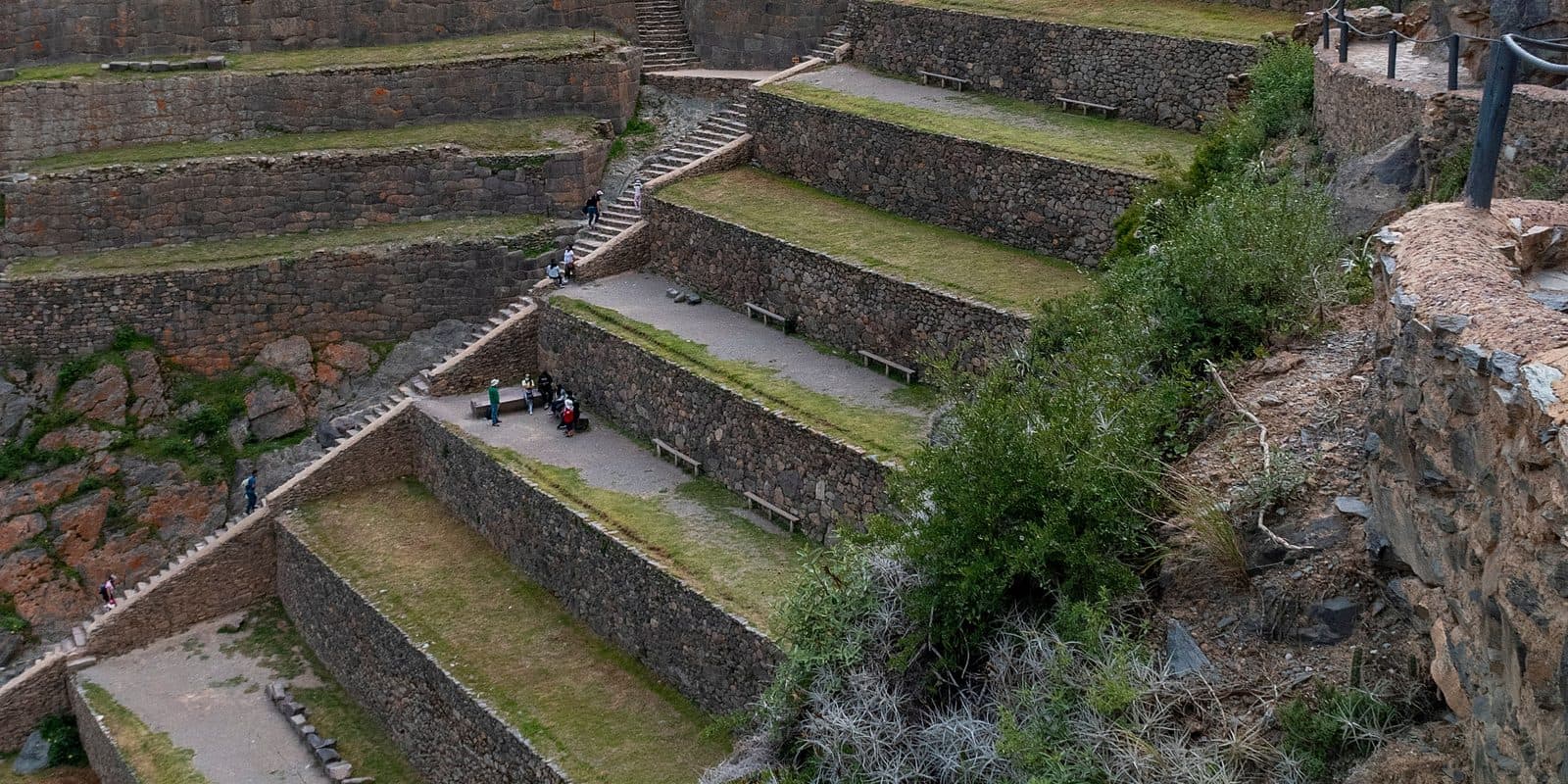
Why fourteen days is the honest length
Here is a truth travel brochures avoid: the classic Peru route has a natural speed, and it is slower than a week. Lima wants two days because its food scene alone deserves them and because every hour at sea level is an hour your body banks against the Andes. The Sacred Valley wants three or four nights because it is both the best acclimatization strategy in South America and a destination in its own right. Machu Picchu wants a whole day. Cusco wants enough evenings that you stop photographing it and start living in it. Add the two travel days that bracket every international trip and the arithmetic lands, again and again, on fourteen.
The ten-day version of this route — which we also build, and happily: here is the 10 day Peru itinerary — is the core with efficient edges. The fourteen-day version is the same core with its natural margins restored: the free day in the valley, the Cusco morning with no agenda, the second slow dinner. Nothing heroic gets added. What gets added is room — and room, at altitude, is not a luxury. It is engineering.
The shape of the two weeks: coast, valley, citadel, city
Think of the trip as two acts with a hinge. Act one lives low and warm: the Pacific coast, then the valley floor. The hinge is the day the train slides down the Urubamba gorge to Machu Picchu. Act two lives high: Cusco, mastered rather than endured, because by then your blood has done its homework.
| Stretch | Days | Where you sleep | What it is for |
|---|---|---|---|
| Lima | 1–3 | Lima, sea level | Food, museums, the coast — and banking oxygen |
| Sacred Valley | 4–7 | Urubamba area, ≈ 2,800 m | Ruins, markets, gentle acclimatization, one free day |
| Machu Picchu | 8 | Cusco, ≈ 3,400 m | The citadel, full day, by train from the valley |
| Cusco | 9–13 | Cusco, ≈ 3,400 m | The city in depth, day trips, one unplanned day |
| Home | 14 | — | Flight to Lima, connection out |
The engine below composes the actual days — which ruins, which markets, which workshops, in which order — from the same templates our local team operates. The stretch structure above never changes; the texture inside it is what you choose.
The itinerary, day by day — pick who travels and how
Choose your travel party and your style. Every variant keeps the same two-act shape and the same altitude logic; open any day to see its story.
Two full weeks, classic style: shared-service days where they shine, private transfers where they matter, 3-star boutique beds — and the four extra days spent on depth, not detours. The version of Peru people mean when they say they took their time.
Fourteen days for adults only, no children: private service throughout, 4-star hotels with soul, long valley mornings and evenings that never watch a clock. The extra days go to the slow things — a second signature dinner, an unhurried market, a balcony that earns its keep.
The complete two weeks, fully private and 5-star: the finest rooms of the coast and the Andes, the panoramic train, days built around your appetite and your pace. Fourteen days is where luxury stops meaning speed and starts meaning breadth.
The family two weeks: same skeleton as the classic, with the slack families actually need — pool hours that cost nothing, one anchor plan per day, and a rhythm that lets the youngest traveler set the afternoon tempo without stealing a single landmark.
Two weeks, private and 5-star, built for a family: your own guide and vehicle every day, connecting rooms and real pools, and enough calendar to absorb naps, whims and one glorious do-nothing day. Nothing rushed, nothing missed.
Day 1 · Lima
Arrival in Lima
Day 2 · Lima
Ballestas Islands & the Huacachina oasis
Day 3 · Sacred Valley
Maras and Moray
Day 4 · Sacred Valley
Chinchero, Yucay & Ollantaytambo (shared)
Day 5 · Sacred Valley
Pisac & its market
Day 6 · Sacred Valley
A full day with the Huilloc community
Day 7 · Sacred Valley
Horseback ride around Urubamba
Day 8 · Cusco
Machu Picchu
Day 9 · Cusco
Cusco city tour
Day 10 · Cusco
Humantay Lagoon
Day 11 · Cusco
Rainbow Mountain (Vinicunca)
Day 12 · Cusco
Half day participatory cooking class and market with Rooftop kitchen
Day 13 · Cusco
The Andean Baroque Route
Day 14 · Cusco
Return flight
Day 1 · Lima
Arrival in Lima
Day 2 · Lima
Lima city tour + Dinner at Huaca Pucllana
Day 3 · Lima
Barranco, anticuchos & picarones
Day 4 · Sacred Valley
Maras and Moray + Cicciolina picnic at Maras or Huaypo
Day 5 · Sacred Valley
Chinchero, Yucay & Ollantaytambo + Signature lunch & the Alqa museum
Day 6 · Sacred Valley
Awanacancha and the Pisac market
Day 7 · Sacred Valley
Horseback ride around Urubamba
Day 8 · Sacred Valley
A full day with the Huilloc community
Day 9 · Cusco
Machu Picchu
Day 10 · Cusco
Horseback riding around Cusco (private) + Dinner at Pachapapa
Day 11 · Cusco
Earth offering ceremony
Day 12 · Cusco
Live Andean music with Belivex
Day 13 · Cusco
The Andean Baroque Route
Day 14 · Cusco
Return flight
Day 1 · Lima
Arrival in Lima
Day 2 · Lima
Lima city tour
Day 3 · Sacred Valley
Maras and Moray
Day 4 · Sacred Valley
Chinchero, Yucay & Ollantaytambo + Signature lunch & the Alqa museum
Day 5 · Sacred Valley
Huilloc & Pumamarca, the weaving community
Day 6 · Sacred Valley
Awanacancha and the Pisac market
Day 7 · Sacred Valley
Horseback ride around Urubamba
Day 8 · Cusco
Machu Picchu
Day 9 · Cusco
Cusco city tour
Day 10 · Cusco
Humantay Lagoon
Day 11 · Cusco
Cooking class at Marcelo Batata
Day 12 · Cusco
The Andean Baroque Route
Day 13 · Cusco
Earth offering ceremony
Day 14 · Cusco
Return flight
This plan opens on your canvas exactly as you see it: move days, remove or add experiences, and the total appears once you pick your dates.
Looking for treks, mountains and more adrenaline? That's a different rhythm, not a variant of this plan: meet the Adventure door.
What the four extra days actually buy
Compared with the ten-day route, nothing new appears on the map — and that is the point. Day three gives Lima a full third act: the historic center in the morning, Barranco at golden hour, a last cebiche eaten without checking the time. The fourth valley night funds the day travelers write to us about afterwards: no bus, no plan, a walk into Urubamba's market, an afternoon by the salt terraces you previously saw through a window. And Cusco's stretch grows from three days to five, which changes the city's whole personality: San Blas stops being a viewpoint and becomes your neighborhood, the day trips stop competing with the city itself, and the unplanned day — the one we defend hardest — stops feeling like a risk and starts feeling like the reward it is.
Two weeks also absorbs reality. A rainy afternoon, a slow morning, a market that deserves two more hours: on a seven-day sprint each of these costs you a landmark; on this route they cost nothing at all. That resilience is invisible on paper and priceless on the ground.
Couple vs. family across two weeks
The skeleton is identical — altitude negotiates with no one — but two weeks amplifies what the toggle changes. Couples get evenings: sunset miradores, long tables, the second glass. The fourteen-day couple's trip is really a series of unhurried nights connected by beautiful days. Families get afternoons: pool hours, sieste-friendly rhythms, one anchor activity per day with genuine slack around it. The family version of two weeks is the rare itinerary where the adults also rest. And the honest note that applies at any length: the Romantic door is built strictly for trips without children, so the family toggle sets it aside rather than bending it. Families travel Classic or Luxury, and travel them beautifully.
The three doors over fourteen days
| Classic | Romantic | Luxury | |
|---|---|---|---|
| Service | Shared-service days with other travelers; private airport pickups | Private throughout | Private, start to finish |
| Hotels | 3-star boutique | 4-star with character | 5-star, the best address in each place |
| Train to Machu Picchu | Panoramic-window service | Panoramic-window service | Vistadome, both directions |
| How the extra days feel | More places at the same friendly pace | Longer mornings, protected evenings | Depth without a single early alarm |
| Who it fits | First-timers with time to do it right | Adults only, no children | Couples and families who want zero friction |
None of the doors touches the structure: the order, the whole day at the citadel, the acclimatization arc, and the 48-hour human confirmation of every detail are constants.
The temptation to add more — and how to think about it
Fourteen days is when the map starts whispering. The Amazon is one short flight away; Arequipa and the Colca canyon call from the south; Lake Titicaca floats in brochures. Any of them can join this trip — the planner will build it gladly — but each costs about three days once real travel times are counted, and those days come out of the valley or Cusco. Our default answer is depth over distance: this route, as drawn. The exception we actively encourage: if wildlife is the reason you crossed an ocean, take the jungle days and trim Cusco — that trade is honest. What we counsel against is the fourteen-day trip with five flights: it photographs well and lives badly. Trekking — the Inca Trail, Salkantay — is its own rhythm entirely and lives behind our Adventure door; a line at the foot of this page points there.
Machu Picchu on a two-week clock
The citadel works exactly as it does on any length — full day, by train from Ollantaytambo, guide handling the circuit — but two weeks improves it in one quiet way: flexibility. If your preferred entry window is gone for day eight, the plan slides a day without dominoes. Read how to get to Machu Picchu for the mechanics and the trains guide for what the ride is like; the entry itself — circuits, quotas, advance windows — has its own dated guide in Machu Picchu tickets. The short version stays the same: secure entry early, carry your passport, let the valley-side start save you two hours over the Cusco day-trippers.
Where you sleep, week by week
Week one's real hero is the valley. Around Urubamba, three to four nights put Pisac's market and terraces, the Maras salt pans, Moray's circular laboratory and living Ollantaytambo all within an hour of your pillow — at the region's kindest sleeping altitude. Our Sacred Valley guide explains why we treat it as the heart of the trip and not a corridor. Week two belongs to Cusco — San Blas or the center, steep and gorgeous — and by then 3,400 meters reads as atmosphere, not obstacle. If you are weighing where to spend more nights, the comparison in Sacred Valley vs. Cusco settles it the way we would.
When to take two weeks in Peru
Every season works; they simply sell different trips. May to September is the postcard: dry air, sharp light, cold nights, full trains. April and October are our quiet favorites. The green season (November to March) suits the two-week format unusually well — its afternoon showers are exactly the kind of interruption a fourteen-day plan shrugs off, and the valley doubles its greens. February closes the Inca Trail and soaks the most; the citadel stays open. Month-by-month detail lives in the best time for Peru.
What two weeks cost — and where the number lives
No figures on this page, by design: a trip this size moves with your dates, your style, your party, your season, and a printed number would be either padded or false. For honest orientation at every level, start with our Peru trip cost guide and the budget breakdown. For the exact total of this itinerary in your configuration, the planner shows it after your dates — before you commit to anything, with a person confirming every line within 48 hours.
Eating your way through fourteen days
Two weeks is the length at which Peru's kitchen gets to show its whole hand. Lima opens with cebiche at lunch and closes, days later, with the tasting menu you booked your appetite for. The valley feeds you like a farm that learned plating: giant corn, river trout, wood-oven everything, market fruit with names you will keep forgetting. Cusco cooks for altitude and history at once — quinoa soups, slow lamb, new-school alpaca in San Blas, and on some proud last night, cuy. With fourteen days you can also afford the thing food memories are made of: returning. The stall you loved on day five is still there on day twelve, and going back is its own kind of arrival. Families lean on early, simple kitchens; the Romantic and Luxury doors hold the tables people plan trips around.
The arrival protocol: spending jet lag wisely
Most long-haul arrivals into Lima land at night, and what you do with the first thirty-six hours quietly sets the tone for the whole fortnight. The protocol we build in: a late first morning on purpose — the itinerary's day one asks nothing of you before noon. Then the coast: the clifftop walk from Miraflores toward Barranco is flat, oxygen-rich and exactly as long as you want it to be, which makes it the perfect first-day dial. Dinner early, sleep long. Day two is when Lima properly begins — the historic center while your attention is fresh, the Larco Museum's gold rooms, the cebichería lunch that resets any remaining time-zone confusion better than caffeine ever could. By the morning of the Cusco flight you are rested, fed and slightly in love with a city most itineraries treat as a layover. That is the correct condition in which to meet the Andes.
The Cusco days: trips out, and the case for staying in
With five Cusco days, week two supports one or two outings beyond the city — and the itinerary chooses them by acclimatization arithmetic, not by brochure gravity. The south valley run (Tipón's water terraces, the colonial painting bonanza of Andahuaylillas) is gentle and underrated. Higher-altitude outings only make sense late in the second week, once your nights at 3,400 meters have compounded — which is why they appear, when they appear, near the end. But the honest secret of week two is that Cusco itself is the destination: the San Pedro market before nine, the artisans of San Blas actually at work, the cathedral's strange and wonderful paintings, courtyards that reward the unscheduled hour. Travelers who treat Cusco as a base camp leave with photos; travelers who give it real days leave with a neighborhood. Two weeks lets you be the second kind.
Practical notes for the long version
Altitude: the route solves it structurally; you contribute water, light first dinners and patience on day four. Details in the Cusco altitude guide. Packing for two weeks is packing for ten days plus laundry — hotels along this route handle it well; the full list is in the Peru packing list. Safety on the corridor is a matter of ordinary city sense; our safety guide covers the specifics. And the meta-advice for a fourteen-day trip: protect the empty spaces. The itinerary earns its length precisely because not every hour is spoken for — resist the urge to fill it, and it will pay you back in the stories you end up telling.
Frequently asked questions
- Is 2 weeks in Peru too long?
- No — two weeks is the length at which Peru stops being a checklist and becomes a place you actually inhabited. The core route (Lima, Sacred Valley, Machu Picchu, Cusco) fits comfortably in ten days; the extra four buy you the unhurried version: a second Lima evening, a free valley day among the salt terraces, Cusco with time to wander, and a pace that survives one rainy afternoon or one slow morning without dominoes falling.
- Should I add the Amazon or Arequipa with 14 days?
- You can — but count the cost honestly. A jungle lodge or the Colca canyon eats three days once you include the travel to get there and back, and those days come out of the Andes. Our default two-week route spends them on depth instead: more valley, more Cusco, zero airport mornings beyond the two you cannot avoid. If wildlife or the canyon is the dream, tell the planner and it becomes a different, equally honest trip.
- What is the ideal week-by-week structure for two weeks in Peru?
- Week one: the coast and the valley — Lima's food and museums at sea level, then three or four nights in the Sacred Valley at a merciful 2,800 meters, ruins and markets at walking pace. The hinge: Machu Picchu, reached by train from the valley side. Week two: Cusco and its surroundings at 3,400 meters, which your now-acclimatized body treats as home base, with a genuinely free day near the end.
- Is two weeks in Peru doable with children?
- Two weeks is actually the most child-friendly length: the family variant on this page uses the extra days precisely where families need slack — pool afternoons, one anchor activity per day, and no travel day that stacks a flight and a big outing together. The altitude logic is identical for kids and adults; the pace is what changes, and fourteen days finances that pace without cutting any landmark.
- How far ahead should I lock Machu Picchu for a two-week trip?
- The same as any trip: entry tickets and trains for dry-season dates deserve several weeks of anticipation, the Inca Trail several months. The advantage of two weeks is flexibility around the citadel day — if your preferred circuit sells out for one date, the itinerary can shift a day without collapsing. When you build the plan in our planner, the team pins tickets, trains and every seat with you within 48 hours.
- When is the best time for two weeks in Peru?
- The dry season (May to September) gives the Andes their famous light and their famous queues. April and October are the quiet sweet spots. The rainy months (November to March) reward exactly this kind of longer trip: showers pass, and a fourteen-day plan has the slack to shuffle an afternoon that a seven-day sprint does not. February is the wettest month, and the one the Inca Trail closes.
- Do I need to speak Spanish for a trip like this?
- No. The travel corridor speaks enough English, your guides are bilingual, and the plan arrives organized before you land. A handful of Spanish courtesies opens doors and markets wonderfully — worth learning on the plane — but nothing on this route depends on fluency. Where something needs negotiating, that is what the local team is for.